Case No. 004
The Middle of No Fucking Place
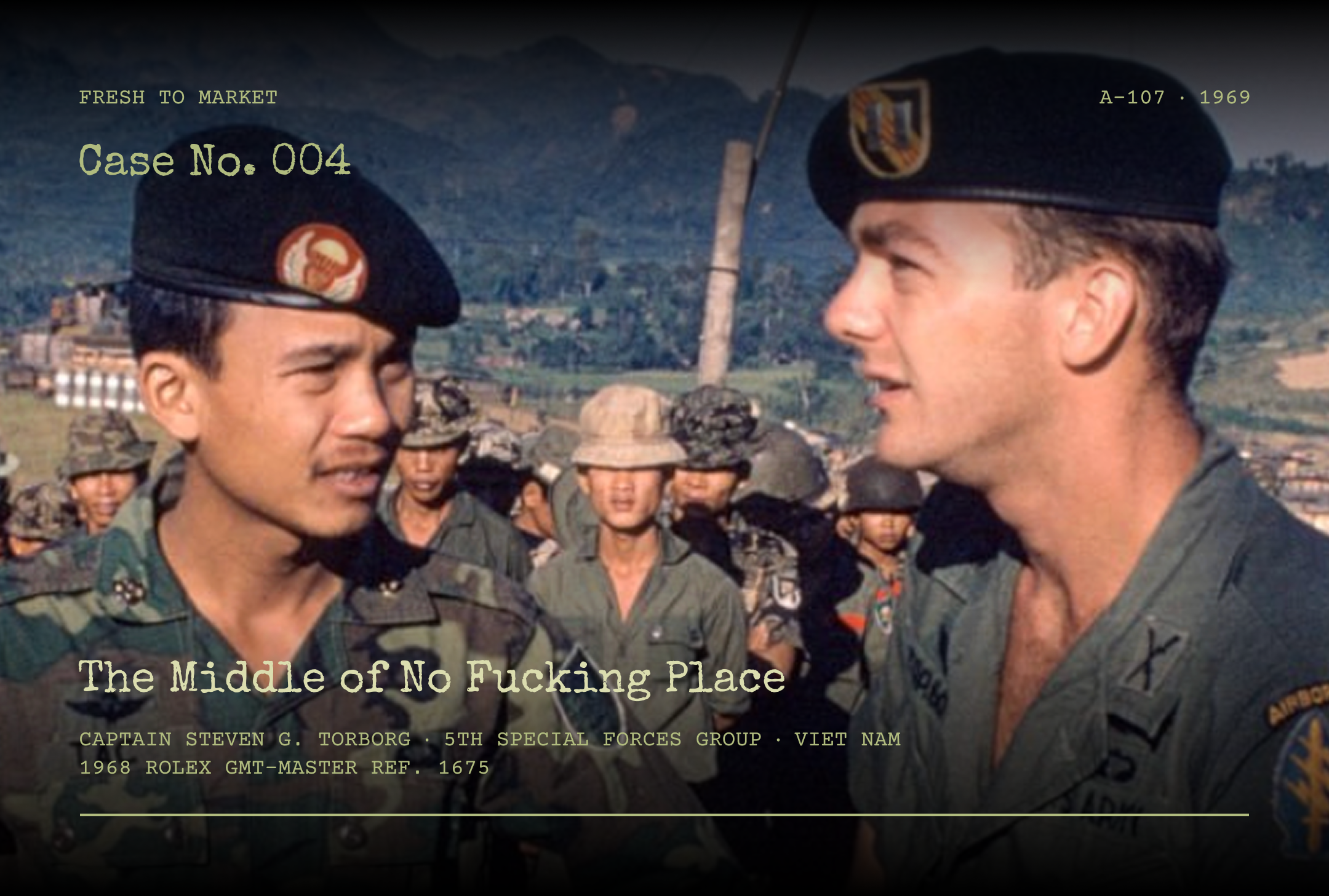
The photograph showed a Special Forces soldier at a forward operating base somewhere in Vietnam. A GMT-Master on his wrist. A 5th Group flash and captain's bars on his beret. And on his chest, just visible, a name tag. Torborg.
I knew there was a man behind that image worth finding.
I searched for Captain Torborg. Nothing useful. I typed Torborg into Facebook. Plenty of results. Faces I didn't recognize. Names that didn't fit. I went through them one by one and came up empty.
I let it sit.
Then one Monday morning I felt like I had to try again. I tried a different search.
One page came back.
His first name. His face. The 5th Group confirmation right there on the screen. I sat with it for a moment before I did anything else. After all that searching, there he was. The same man from the photograph, sixty years later.
I tracked down a number, left a voicemail, then immediately followed it with a text and the image I had been looking at. The one that started all of this.
I missed his call back. As soon as I saw it I called him right back.
When he picked up he seemed genuinely impressed that someone had found him the way I had. That first call ran close to an hour. He was warm, but measured.
By the end of that week something had shifted. He started calling me with questions. He was pulling things together, trying to assemble the full picture. An 80-year-old man who had been sitting on these objects for decades suddenly understood what was happening and started doing the work himself. I think he had begun to see it for what it was, a chance to document his own legacy before it was too late.
He wasn't hidden. He was just unasked for.
His name is Captain Steven G. Torborg. 5th Special Forces Group. I Corps, the northernmost region of South Vietnam, the hardest edge of the American presence in the country. Detachment A-107 at Tra Bong, a small outpost in Quang Ngai Province sitting above a river valley in the hills. Surrounded by jungle. A kid in his twenties.
His father landed at Omaha Beach on D-Day. An uncle retired as a Navy Admiral. Another served as an Army surgeon across North Africa and Egypt, and came home to work intelligence for the CIA. Steve wasn't the first man in his family to answer that call. He was the next one.
Steve described Tra Bong the only way it deserved to be described: the middle of no fucking place.
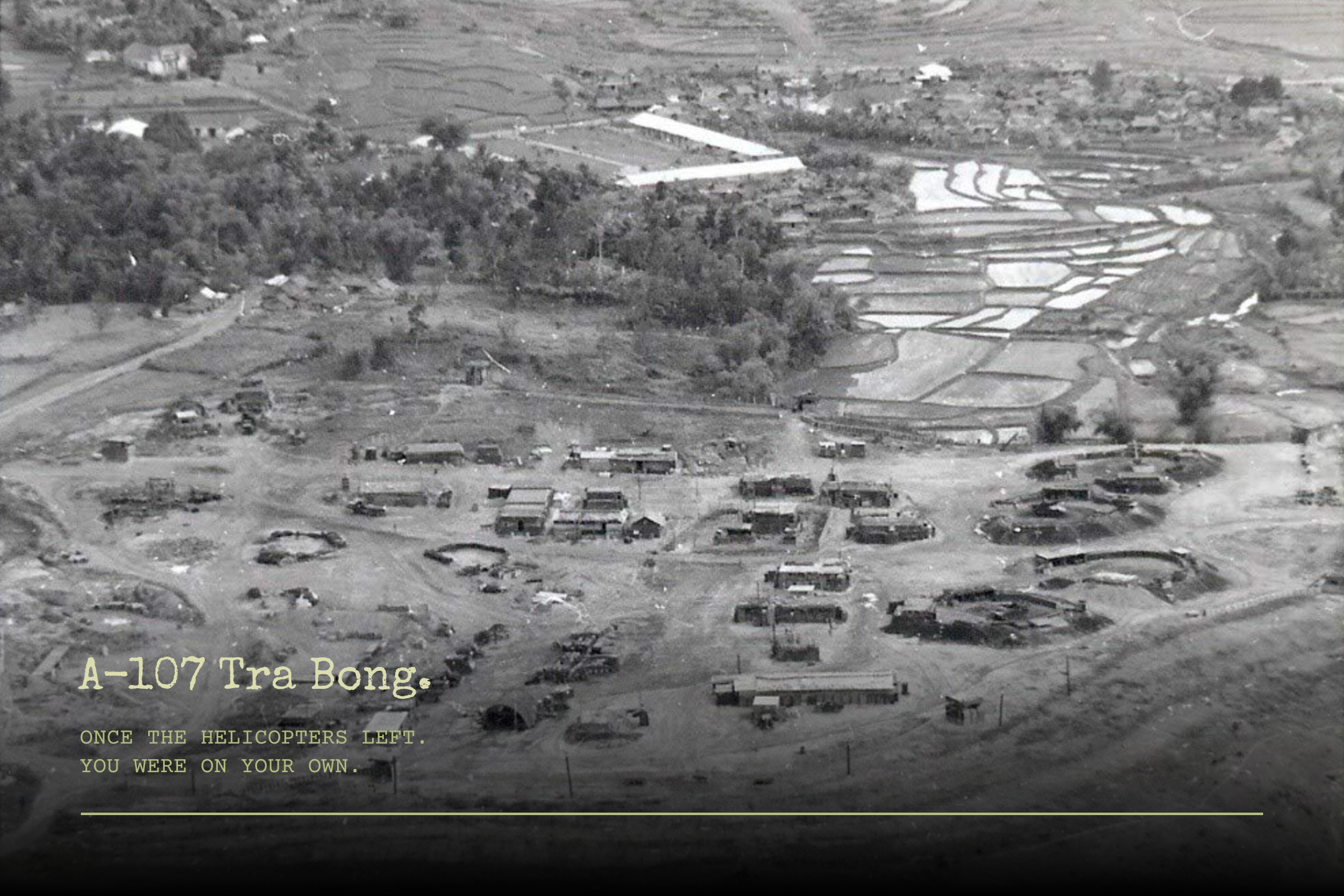
Look at that photograph before you read another word.
A single hilltop carved out of the valley floor. A tight perimeter road. A handful of structures. Jungle pressing in from every direction. And in the wide aerial, something that takes a moment to register: the camp almost disappears. Pull back to altitude and it is a small smudge of cleared earth in the middle of an enormous, indifferent landscape.
There had been roads into the valley. The VC had seen to it that none of them were passable. The only way in or out was by air. When those helicopters left, you were on your own.
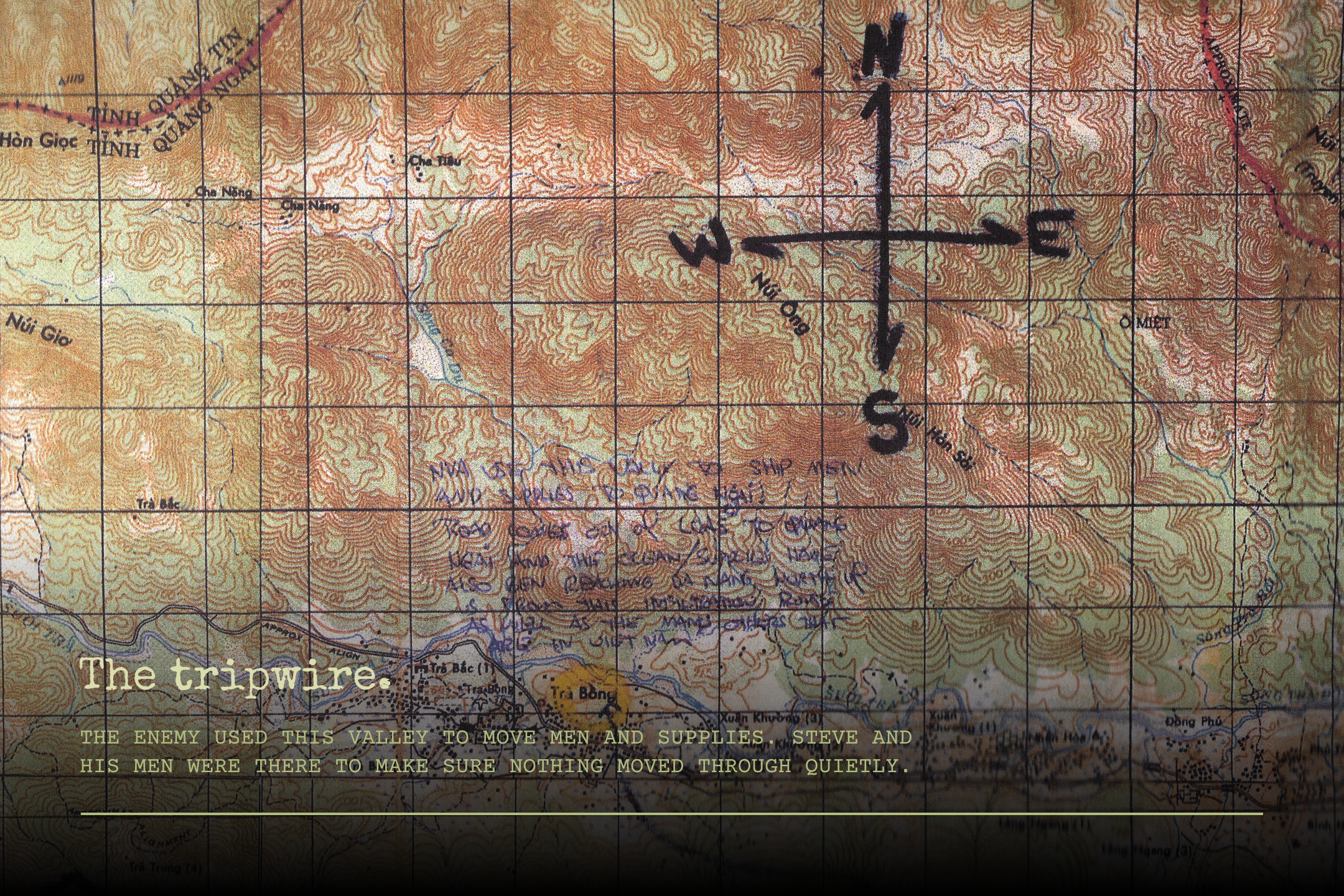
A-107 sat at the western end of the Tra Bong valley because the valley was a corridor. A natural route for VC forces pushing toward the larger American bases near the coast. Steve and his men were the tripwire. First line of defense. Early warning. Their job was to build and lead an indigenous fighting force of Vietnamese and Montagnard soldiers, more than a thousand men, hold their AO, and make sure nothing moved through that valley quietly. Fifty percent of their time in camp. The other fifty percent in the woods at all times looking for VC.
For the enemy, overrunning a Special Forces camp was never just military. It was political. Proof of control. Proof that the South Vietnamese Government and their American allies couldn't hold the highlands. That made A-107 a target from the day it was established.
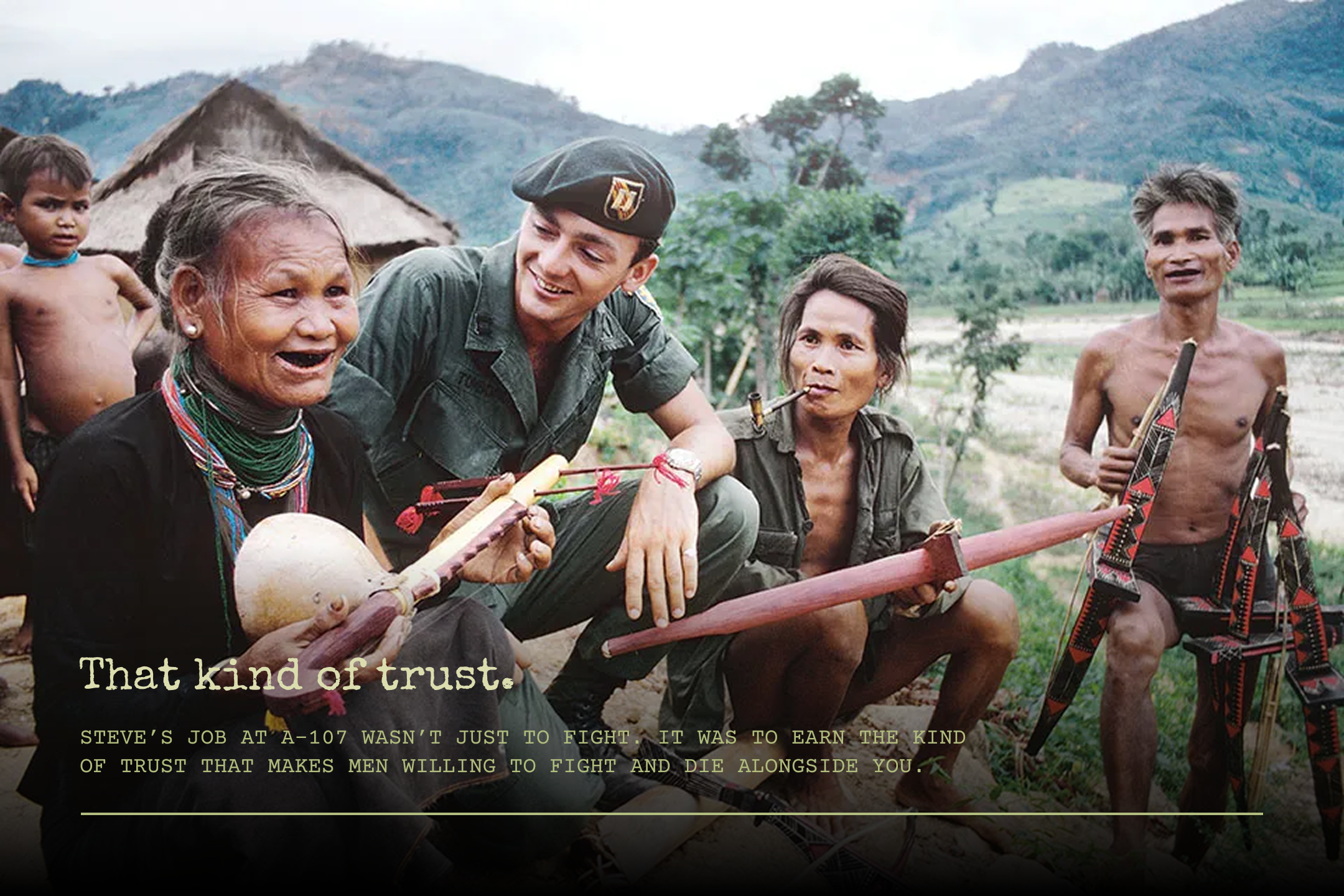
But Steve understood something the enemy didn't account for. The fight for the valley wasn't won with weapons alone. Success required the support of the people. His men were armed and trained to defend their homes against the enemy and thus they would stay and fight. His team brought medical care to Montagnard villages that had never seen a doctor. Look at that photograph of Steve crouching in the dirt laughing with an elder woman and you understand what that relationship actually meant. He isn't performing for the camera. He is completely present, in the middle of no fucking place, and the joy in that image is real. That kind of trust is not given. It is earned slowly, with presence and consistency and genuine respect.
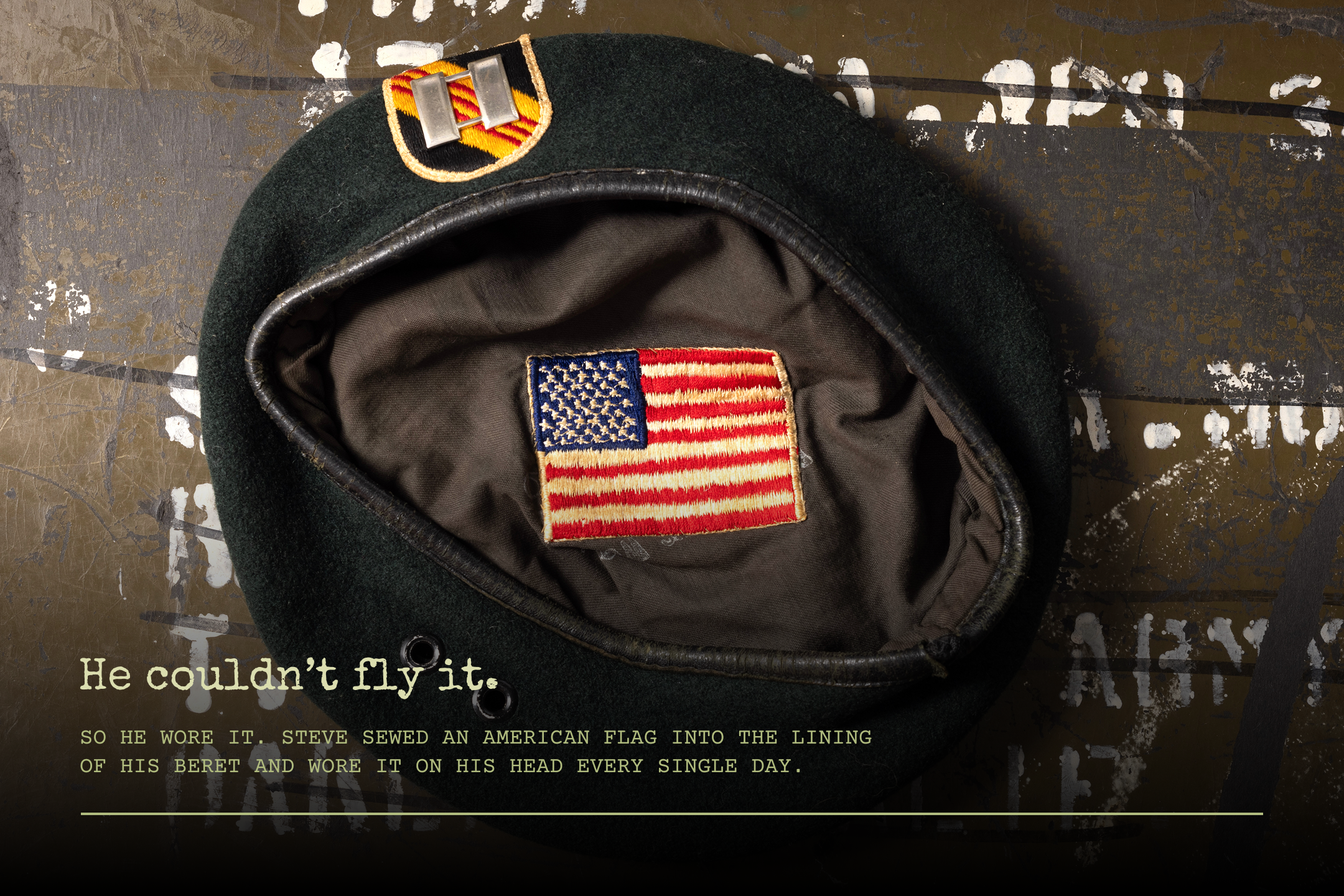
There was one more constraint that defined everything about that camp, one that only becomes visible when you know to look for it. The Americans at A-107 were not permitted to fly the United States flag. Officially the camp was Vietnamese. The Green Berets were advisors, nothing more. Their presence, their sacrifice, their dead, all of it conducted under a flag that wasn't theirs.
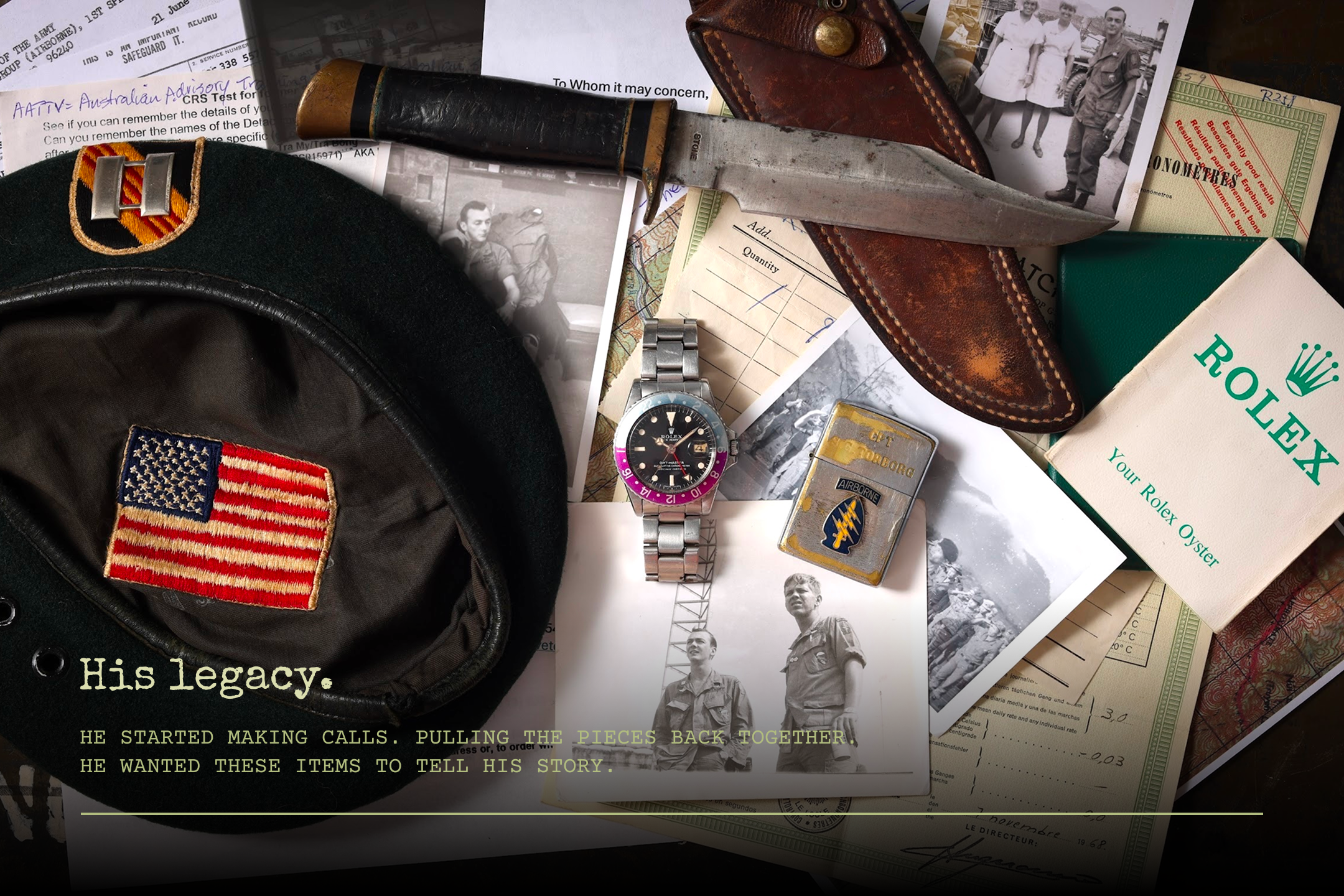
So Steve sewed an American flag into the lining of his beret and wore it on his head every single day. His colors kept close. His act of defiance in a place where defiance had to be quiet. He couldn't fly it. So he wore it.
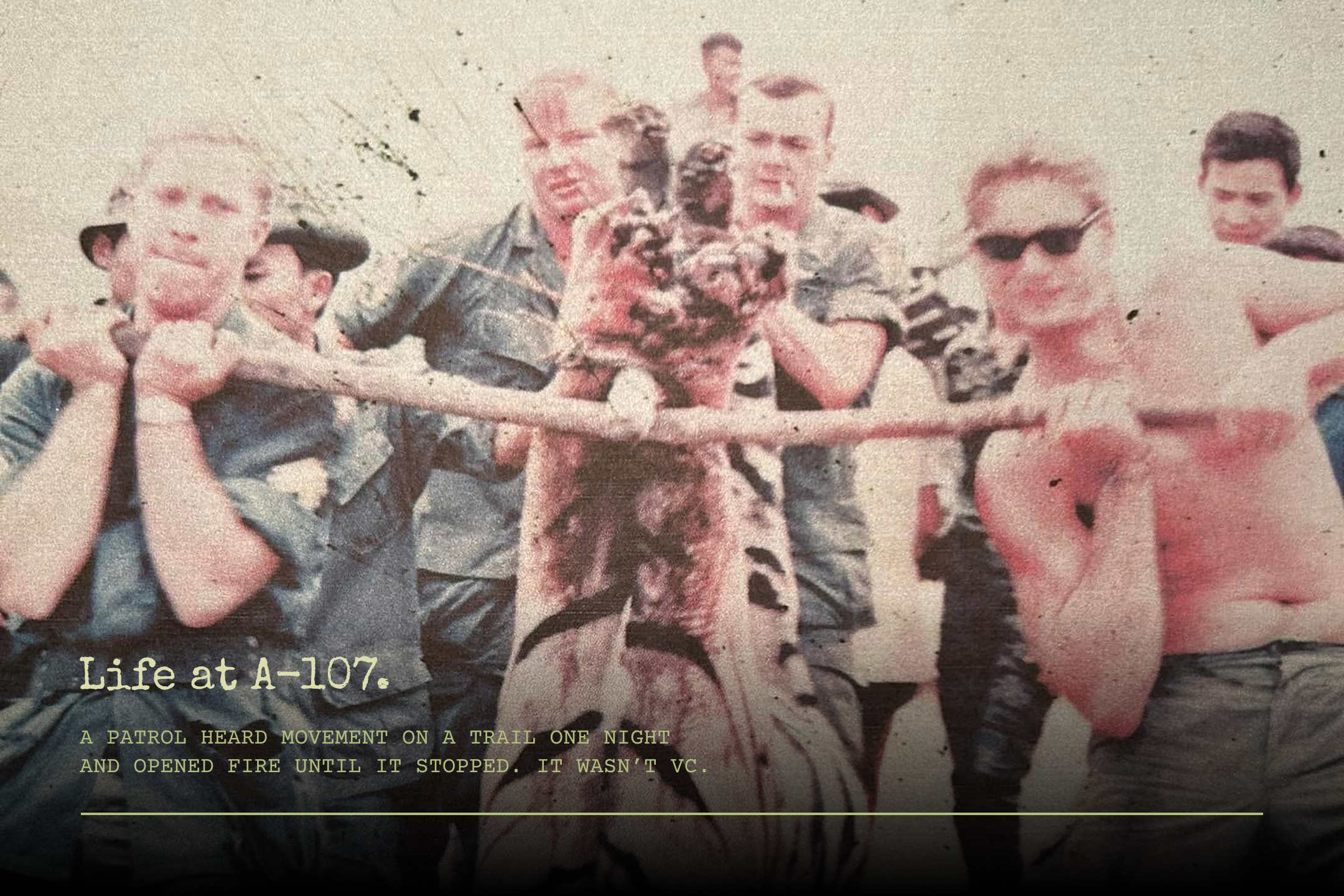
The camp had history before Steve got there. In January 1966 the VC defeated a large force from the camp, killing a number of American and Australian advisors in a fierce firefight. According to Steve, the ranking American officer was beheaded. It was exactly the kind of statement the VC intended. That assault later became the basis for the central battle sequence in the 1968 John Wayne film The Green Berets, set explicitly at Camp A-107. Steve arrived two years after that. The memory of it wasn't history. It was the ground he walked on every day.
Steve wanted a Submariner. His buddy went to Hong Kong on R&R to buy one and they didn't have any. He came back with a GMT-Master instead.
As it turned out, Steve preferred it. Thinner on the wrist. Cleaner under his sleeve. Better suited to a man operating in the field who needed a watch that stayed out of his way. The GMT became his watch not by design but by circumstance, which is how most of the best things happen.
In I Corps in 1969 a Rolex wasn't jewelry. It was an identity. The Rolex had become part of the fabric of the Special Forces soldier, almost as much as the beret upon their head. Steve put it the only way it deserved to be put: "You could always spot a Green Beret because he comes back from the field carrying a demo knife, wearing a Rolex, and having a hard-on for his wife."
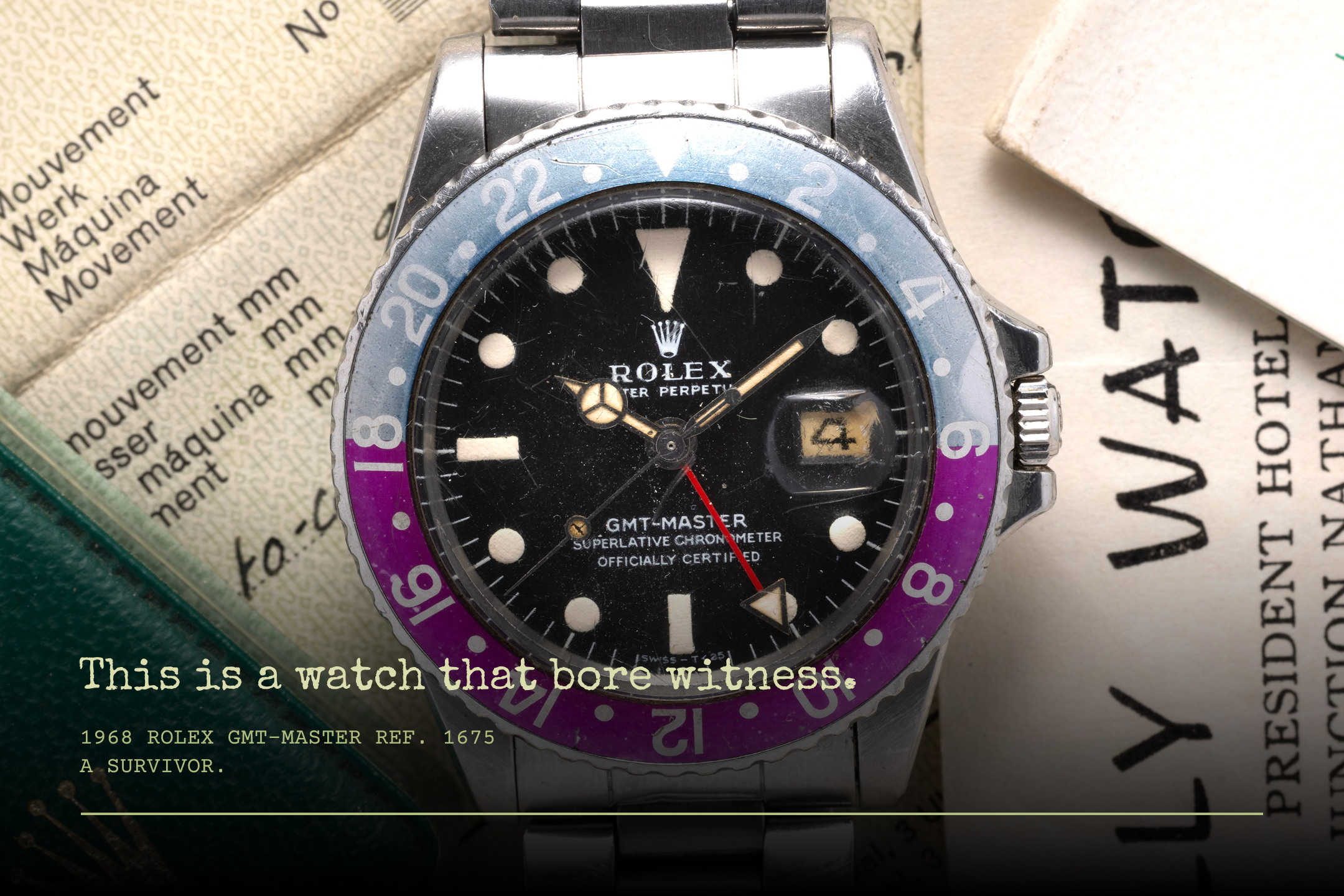
The 1968 ref. 1675 is exactly what you'd hope it would be. Honest. Unpolished. Showing every sign of the life it lived. A working man's tool watch that was used as intended and never cleaned up. It has been sitting in a drawer for years, waiting on a service that never came. Steve held onto it, and its papers, for sixty years.
And then there are the photographs. Him at the base. In the village. Crouching in the dirt laughing with an elder woman. The watch on his wrist in every single one. The same watch. The same man. Sixty years later, both still here.
This is a watch that bore witness.
When he asked what would make the set complete I told him the truth. The beret would be the most powerful thing that could be included. There is nothing more unique to the man, to the brotherhood, to the mission. De Oppresso Liber. But I also told him that because of what it means, if there was a home for it in the family, that's where it deserved to stay. And I meant it.
At first he wasn't sure. But as we kept talking, as he started to see what this could look like assembled whole, he kept coming back to it. The items in those photographs. The beret was part of that picture. He knew it.
By the end of that first week he had started making calls of his own. Reaching out to the friend he had given the shirt to. Trying to track down the uniforms. Pulling the pieces back together because he wanted those items to tell his story.
Near the end of one of our conversations, Steve apologized for talking my ear off. For calling with questions. For taking up my time.
I told him it was my honor.
He said: thank you for giving a shit.
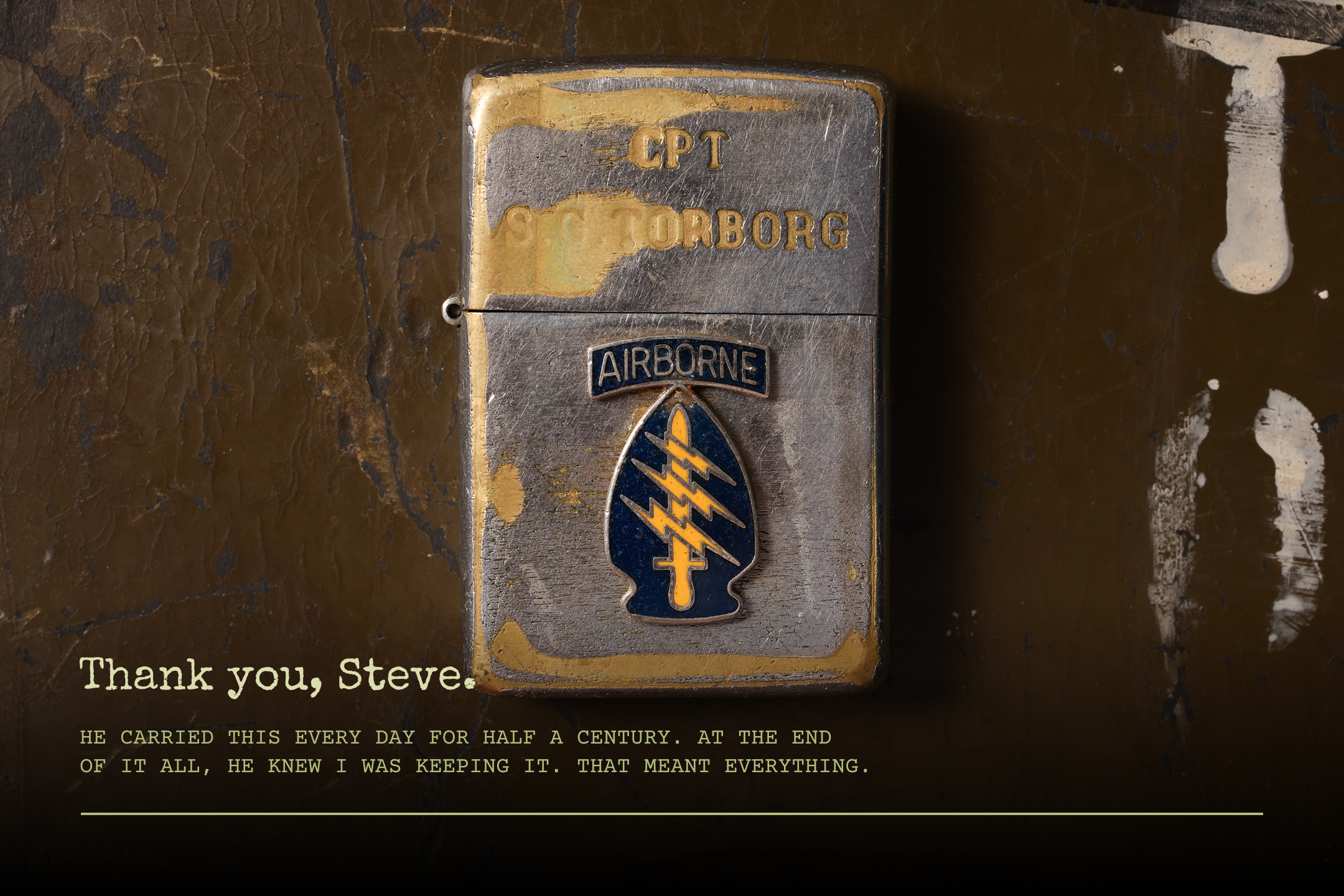
I have been in this business for a long time. I have handled a lot of watches. I have heard a lot of stories. But I have never had a moment hit me the way that one did.
He had no idea what he was giving me. The chance to sit with a man from a generation that is leaving us. To hear it in his own words while there are still words to hear. I grew up too late to sit across from the men who came home from World War II. I watched that generation go without ever getting the chance. I am not making that mistake again.
This all happened within a week. He called back. He texted. When I came across photographs from the era and had questions he responded with the kind of detail that told you exactly who you were dealing with. Rank, insignia, timeline, context. The same mind that once read treelines and enemy movement patterns, still reading everything around it. By Thursday he had called the man who had his old uniforms to ask about the jungle shirt from those photographs.
This is a man who went to the middle of no fucking place for his country. Who earned the trust of communities that had every reason to trust no one. Who wore his flag in the lining of his beret because he wasn't allowed to fly it openly. Who came home to a country that didn’t understand and worse, didn’t want to understand. He and all the others had largely moved on, lived a quiet life, and never asked for recognition.
The men who carried these watches in Vietnam are in their late seventies and eighties. Within a decade most of them will be gone, and the stories will go with them unless someone does the work now. Picks up the phone. Earns the conversation. Sits with it for as long as it takes.
These men want to tell their stories. They have been waiting for someone to ask.
Steve Torborg gave me something I will carry for the rest of my life. The honor of being trusted with his story while he was still here to tell it. His service mattered. What he did in that valley mattered. The men who went to places like Tra Bong and came home without thanks are owed at least this much. Someone who shows up. Someone who listens. Someone who gives a shit.
That is what I get to do. That is the reward.
I set up a call between Steve and the man who would carry this watch forward. A fellow Green Beret. 10th Special Forces Group. Nearly fifteen years of active duty service. I won't use his name here. What I will say is that call ran nearly three hours and I spent most of it just listening. Two men from different generations of the same brotherhood, finding the threads that connected them across fifty years of the same life. The same sacrifices. The same weight. Steve's time paving the way for the generation that followed. The things that changed. The things that never did.
Somewhere in that conversation Steve asked where a man might find a good beret. He wanted one he could have his 5th Group flash put back on. Something to keep in his office. A reminder of who he was.
The man on the other end of that call told him he'd be honored to send him one of his own.
The watch didn't change hands. It changed custody.
Captain Steven G. Torborg. Detachment A-107. Tra Bong, Quang Ngai Province, Viet Nam. C Company, 5th Special Forces Group. 1968-1970.
He wore his flag in the lining of his beret because he wasn't allowed to fly it. He came home quietly, lived a good life, and never asked for recognition. Sixty years later, someone picked up the phone. This is for him and the men who stood beside him.
This is his watch.
Fresh to Market exists because these stories are disappearing. The men who carried these watches in Vietnam are in their late seventies and eighties. Within a decade most of them will be gone. This work exists to make sure they are not forgotten.
If you have a watch with a story behind it, I'd be glad to hear from you.